
Introduction
Cloud and SaaS outages are no longer rare “IT glitches”—they’re a normal part of doing business in 2026. When a major platform goes offline, small and midsize businesses can find email, payment systems, CRM data, and core applications suddenly unavailable. The question isn’t whether your vendors will ever have an outage; it’s how prepared your business is to keep serving customers when they do.
In This Article
- Introduction
- In This Article
- Why Vendor Outages Matter More Than Ever
- Step One: Map Your Dependencies Before Something Breaks
- Step Two: Design Practical Fallbacks (Without Duplicating Everything)
- Step Three: Include Vendor Risk in Your Continuity Planning
- Step Four: Test Your Plan Before the Next Outage
- How ExcalTech Helps Build Vendor‑Resilient IT
Why Vendor Outages Matter More Than Ever
Many organizations now rely on a small set of cloud and SaaS platforms for day‑to‑day operations. Communication, billing, scheduling, customer service, and even internal workflows often run on tools hosted by a handful of large providers. When one of these vendors experiences downtime, the impact can feel immediate:
- Email and collaboration tools stop working, making it hard for teams to coordinate and respond.
- CRM or ERP systems become unreachable, delaying orders, billing, and customer updates.
- Payment platforms stall, directly affecting cash flow and customer experience.
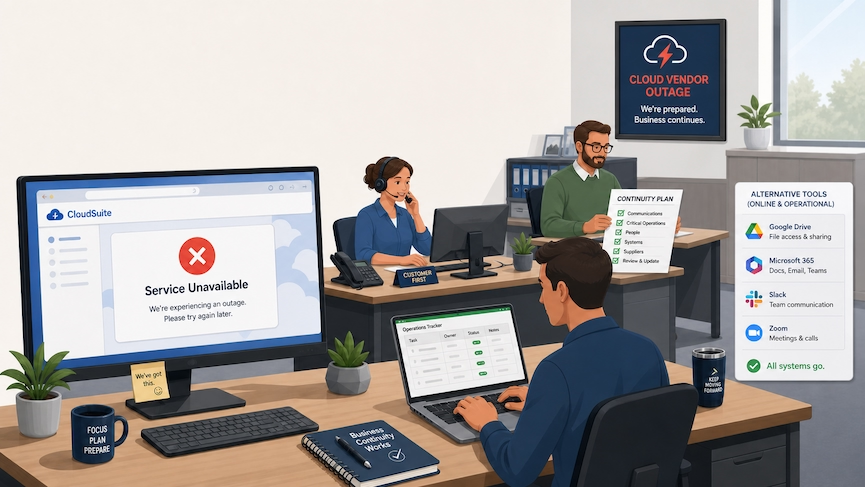
From the customer’s perspective, an outage looks like your business isn’t available—even when the root cause is outside your own environment. That’s why vendor outages belong in your business continuity plan, not just in your list of “technical risks.”
Step One: Map Your Dependencies Before Something Breaks
You can’t plan around vendor outages until you know which services you rely on, and for what. Start by listing the systems and platforms that are critical to your daily operation, such as:
- Email and collaboration tools.
- Phone or unified communications systems.
- CRM, ERP, or key line‑of‑business applications.
- Payment, billing, and accounting platforms.
- File storage and document management.
For each one, ask:
- What specific business processes stop if this tool is down?
- How would staff currently try to work around the outage?
- How long could this outage last before revenue, compliance, or client relationships are seriously affected?
It also helps to look beyond the tools you see and understand the underlying platforms they depend on—for example, multiple services running on the same cloud provider or content delivery network. A managed IT partner like ExcalTech can help map these relationships so you aren’t surprised when an upstream outage affects several tools at once.
Step Two: Design Practical Fallbacks (Without Duplicating Everything)
Most small businesses can’t afford to duplicate every system they use, and in many cases, they don’t need to. Instead, focus on realistic fallback options that keep essential functions running while a vendor works to restore service.
Some examples include:
- Alternative communication channels: If email or your main collaboration platform is unavailable, make sure teams know how to switch to phones, SMS, or a secondary chat tool for urgent coordination.
- Simple offline workflows: For critical processes like taking orders, logging service requests, or tracking time, have temporary analog or spreadsheet‑based methods ready to use. Even basic forms can keep work moving until systems come back.
- Data access strategies: Regular exports or snapshots of key data can provide read‑only access when a SaaS application is down. This might include customer lists, open tickets, or upcoming appointments that staff can reference offline.
These fallbacks don’t replace your primary platforms; they bridge the gap during outages so your business can continue to operate at a reduced but functional level.
Step Three: Include Vendor Risk in Your Continuity Planning
Traditional business continuity plans often focus on internal risks, such as local hardware failures, facility disruptions, or staff unavailability. Modern plans also need to account for vendor incidents, including:
- SaaS downtime that blocks access to key data or workflows.
- Cloud provider outages that impact multiple tools at once.
- Vendor‑side security incidents that require you to temporarily disconnect or change processes.
As you review your continuity plan, add vendor‑specific questions:
- Which critical vendors have documented business continuity and disaster recovery plans?
- Do you understand how they handle outages, communicate status, and estimate recovery times?
- What is your own process for communicating with staff and customers when a vendor incident occurs?
Including vendors in continuity planning helps connect external risks to internal action steps, so your team knows what to do when they see “service unavailable” on a screen.
Step Four: Test Your Plan Before the Next Outage
Plans that haven’t been tested often fail under pressure. Simple tabletop exercises and short simulations can reveal gaps quickly, without disrupting real work. For example, you might:
- Run a scenario where your main communication tool is unavailable for a business day and talk through how teams would coordinate, contact clients, and manage urgent issues.
- Simulate your billing or ticketing system being down for a few hours and practice using an offline or backup process.
During these tests, pay attention to:
- Which workarounds are unclear or missing.
- How long it takes to switch to alternative workflows.
- Where staff feel uncertain or lack necessary information.
Afterward, refine your documentation and make sure your fallback steps are stored where people can easily find them in an emergency. A managed IT provider can coordinate these exercises, adjust technology settings (such as backup routines and failover options), and help ensure your plan is both realistic and actionable.
How ExcalTech Helps Build Vendor‑Resilient IT
Designing IT so your business can keep moving during vendor outages requires both technical insight and practical understanding of how your organization works day to day. ExcalTech supports that by:
- Mapping core systems and vendor dependencies, including underlying platforms and services.
- Identifying single points of failure and areas of vendor concentration risk.
- Helping define fallback workflows, data export strategies, and communication plans.
- Integrating vendor risk into broader business continuity and IT management efforts.
Vendor outages are now part of the reality of doing business online, but they don’t have to stop your operations. With the right preparation, documentation, and partner support, your organization can stay responsive to customers and maintain critical functions—even when a key platform is having a bad day.